On a Friday night, the charcoal smoke starts drifting over Broad Avenue around six. By eight, the sidewalks are full, the bakery cases are picked over, and half the cars parked along the curb wear New York plates. Food writers cross the George Washington Bridge to eat on this street. The people who live here just walk downstairs.
Palisades Park is a borough of roughly 20,000 people with the highest percentage of Korean Americans of any municipality in the United States, and Broad Avenue is its spine, one of the most celebrated Korean dining corridors in the country. I sell homes across Bergen County, and I can tell you this town offers a combination almost nothing else in the county can match: real density, real walkability, a one seat bus ride to Midtown, and a food scene people plan weekends around.
1. Broad Avenue Is a National Food Destination, and It Is Your Main Street
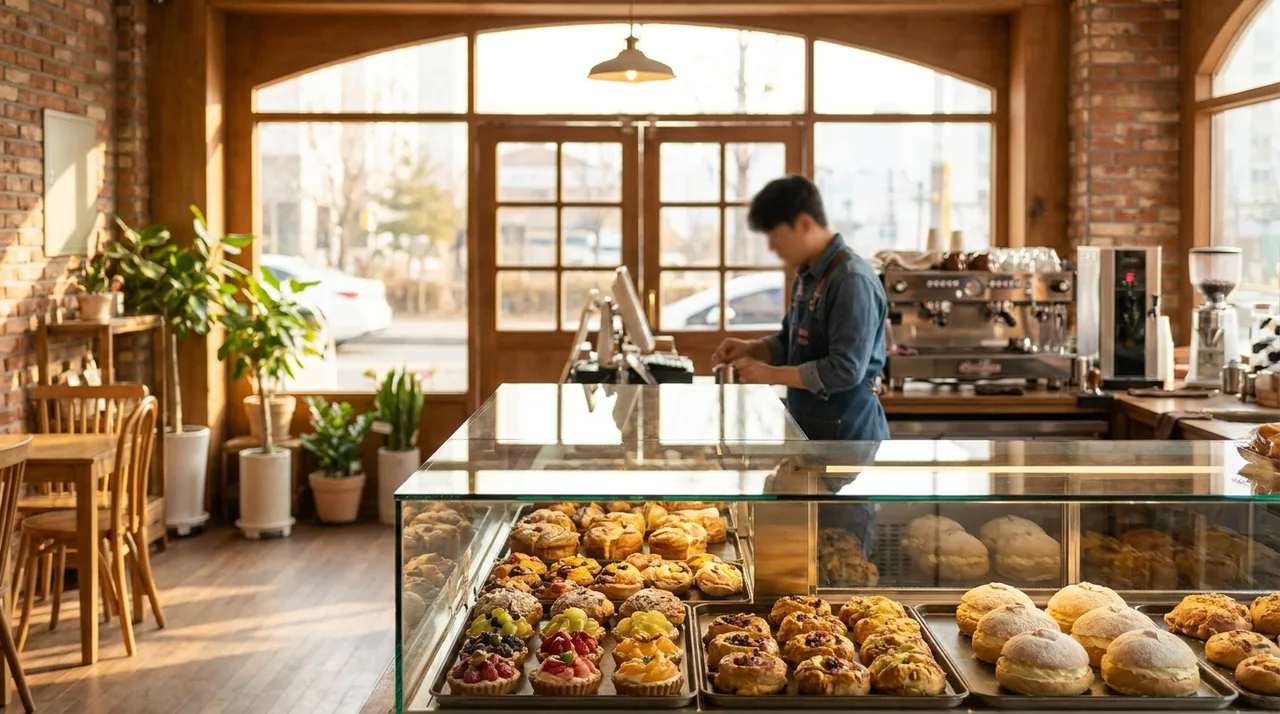
Census data puts Palisades Park’s Korean American share at roughly two thirds of the population, the highest concentration of any municipality in the country, and Broad Avenue reflects it block after block. Charcoal barbecue houses, pocha style late night bars, bone broth specialists, bakeries, and cafes run for more than a mile, and the food press has noticed, with New Jersey Monthly covering the corridor repeatedly. When you live here, that corridor is your errand route. Dinner that other people drive forty minutes for is the thing you pick up on the way home.
2. The Commute: A One Seat Bus Ride Down Your Own Street
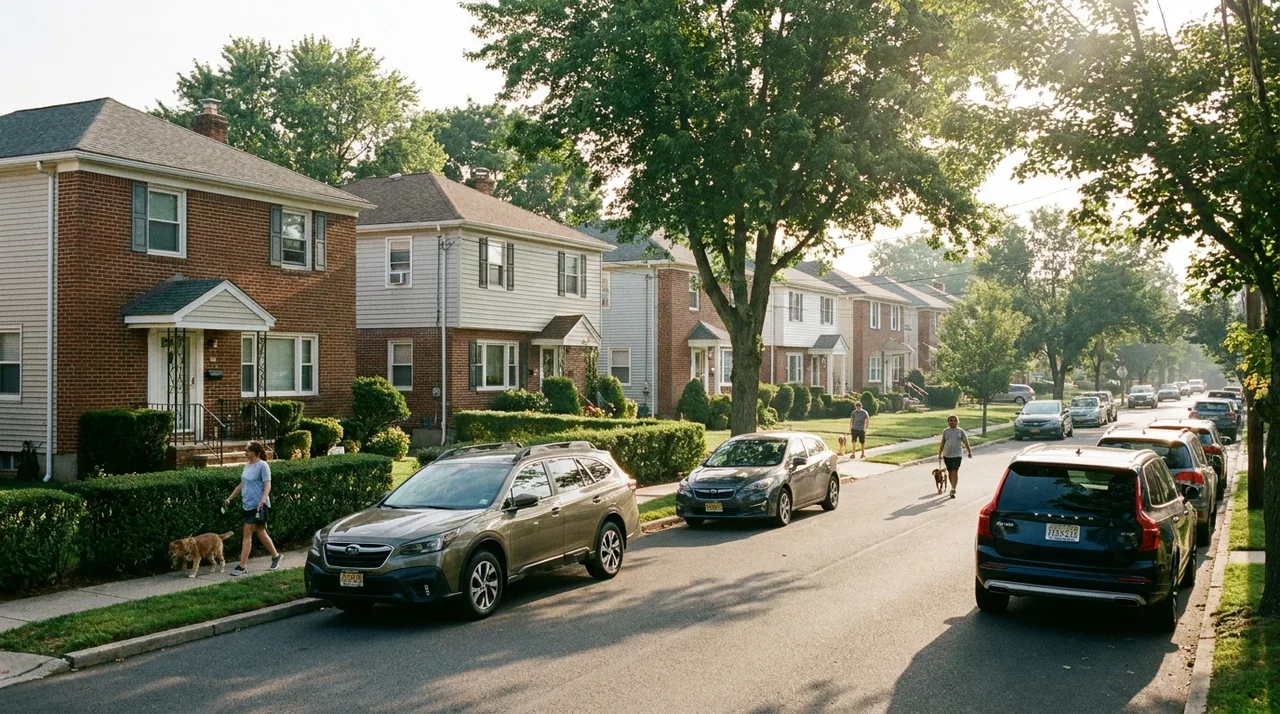
This is the part of Palisades Park buyers underestimate until they live it. NJ Transit’s 165 and 166 buses run directly along Broad Avenue with one seat service to the Port Authority Bus Terminal at 42nd Street and 8th Avenue. The 166 typically makes the run in about 38 to 45 minutes, and because the route runs down the town’s main street, most residents walk to their stop in a few minutes. No park and ride, no transfer. Drivers are about 4.5 road miles from the George Washington Bridge, roughly 5 to 10 minutes to the approach off peak, and Fort Lee’s Bridge Plaza sits minutes north with additional routes like the 156 and 158. For Manhattan commuters comparing towns, this is one of the shortest practical door to desk trips in Bergen County.
3. Housing That Can Pay You Back
Palisades Park’s housing stock is unlike most of Bergen County. The dominant product is the two family home, including a deep supply of newer duplex construction, and that changes the math for buyers. Live in one unit, rent the other, and a meaningful piece of your mortgage is covered by a tenant pool of commuters who want the same bus lines you do. Recent market data puts the median sale price roughly in the $950,000 to $1 million range in 2026, with Zillow’s typical home value near $800,000 reflecting the mix of condos and older homes below that line. Compare that to what a single income property costs across the river and the value case writes itself.
4. Overpeck County Park Sits at the Back Door
A town this dense needs a release valve, and Palisades Park has a remarkable one. Overpeck County Park spreads across more than 805 acres along Overpeck Creek, and Palisades Park was one of the five towns that donated the land that created it. Residents get about five miles of walking and cycling paths, a kayak and canoe launch, turf athletic fields, playgrounds, and a grass amphitheater that hosts county events all summer. Living here is genuinely both things at once: avenue energy on one side of town, herons over the creek on the other.
5. A Compact Town Where Daily Life Works on Foot
Palisades Park runs on a tight, human scale. Groceries, banks, pharmacies, salons, bakeries, and the public library, a member of the large BCCLS lending network, all sit within a short walk of most homes. The school district is small and local, about 1,800 students from pre kindergarten through twelfth grade with a junior senior high school right in town, so most kids walk. The community itself is the deeper draw: a multigenerational town where Korean language services, churches, and civic life are woven into everything. Buyers tell me it feels less like a suburb and more like a small city that happens to fit inside a couple of square miles.
Where to Eat in Palisades Park
I audit every restaurant list I publish, and this one was the opposite of difficult. Broad Avenue and its side streets hold one of the densest collections of serious Korean kitchens in America, from barbecue houses that predate the town’s fame to one dish specialists that would hold their own in Seoul. These five are open, verified, and worth planning an evening around.
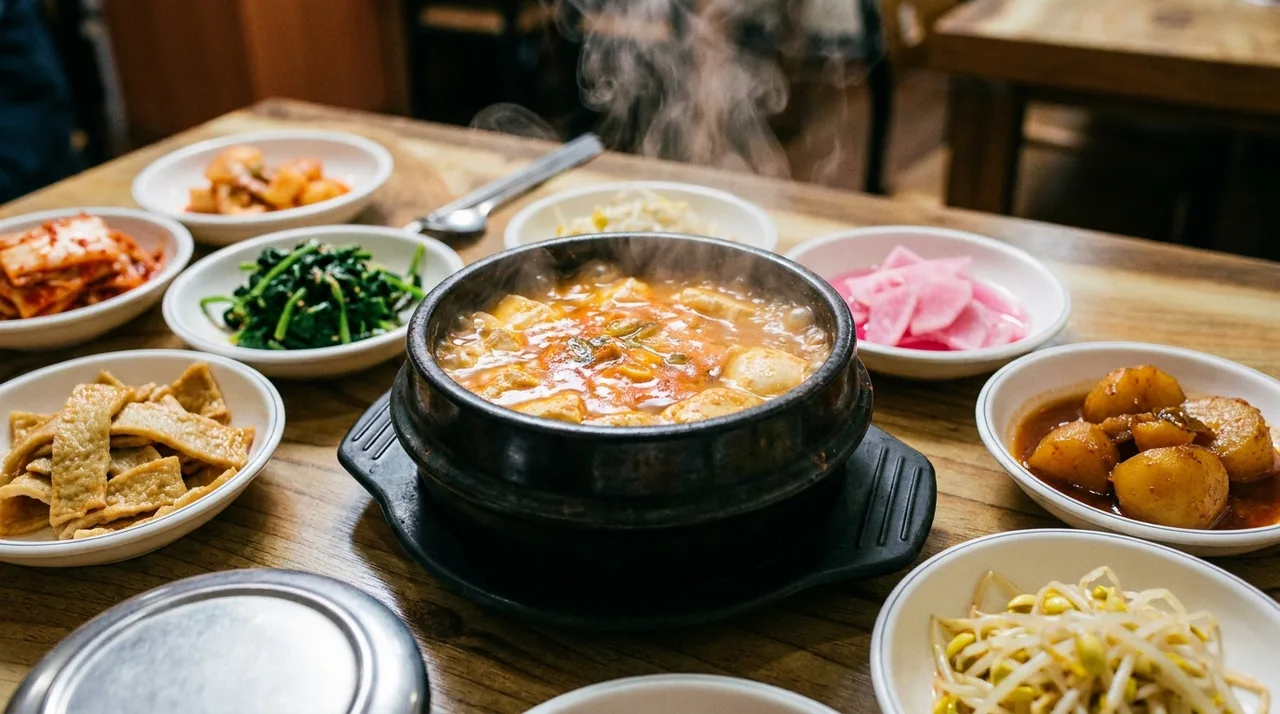
So Moon Nan Jip
The name translates loosely to “famous house,” and it has been earning that since 1995. This is the corridor’s elder statesman of charcoal barbecue, renovated in 2019 with modern on the table grills, and it runs long hours from morning into the late night.
Order the kalbi that regulars have driven in for across three decades, or the whole ribeye that arrives intact and gets carved at the table once it reaches the doneness you asked for. The banchan spread is generous and the room hums every night of the week.
Why locals love it: It has fed thirty years of Palisades Park celebrations and the grills are still going when most of Bergen County is asleep.
Soohtbul Garden
At 42 Broad Avenue, Soohtbul Garden cooks USDA Prime beef over real charcoal, and the difference shows up in the first bite. The ventilation is engineered well enough that you leave without wearing the meal, which anyone who loves Korean barbecue knows is no small feat.
The sleeper strength here is the grilled fish. Whole mackerel off the charcoal and a monkfish stew give the menu a range you find in Seoul more often than New Jersey. Reservations are taken and valet parking makes a dense block easy.
Why locals love it: Prime beef over live coals plus a real grilled fish menu, a pairing almost no American barbecue house attempts.
Hanam BBQ
On Grand Avenue, one block off the main corridor, Hanam burns live coals in every grill in the house. No gas anywhere. The beef program leans on Prime Black Angus and wagyu short rib, and the room has a spacious, younger energy than the old guard spots.
Come at lunch for well priced specials, or bring a group at night and let the staff run the grill for you. The banchan here draws its own praise, which tells you how seriously the kitchen takes the supporting cast.
Why locals love it: The all charcoal rule is non negotiable here, and you can taste the difference in every cut.
Gomtangjip
Tucked on Henry Avenue, Gomtangjip does what the best Korean kitchens do: one thing, at a very high level. The menu is built around gomtang, a milky beef bone broth simmered until it turns silken, along with kkori gomtang made with oxtail and a fiery yukgaejang.
This is the discipline of a one dish house, and the weekday lunch crowd of local business owners is its own review. Pickup and delivery ordering runs through their site when you want the broth at home.
Why locals love it: It is the bowl residents want after a long flight, a cold week, or any occasion that calls for being taken care of.
Soosanghan Pocha
Since 2017, Soosanghan Pocha at 243 Broad Avenue has been the corridor’s late night heartbeat, a Korean street bar with a soju wall, playful decor, and a kitchen that runs deep into the small hours.
The menu is built for a table full of people: spicy tteokbokki, crackling Korean fried chicken, seafood pancake, and hotpots, all made to pair with something cold. Reservations run through OpenTable, and on big match nights the whole room watches together.
Why locals love it: It is where the avenue goes after dinner, and it stays open later than Manhattan expects New Jersey to.
What Palisades Park’s Food Scene Says About the Town
A main street does not become a national food destination by accident. It takes decades of first generation owners betting on the same mile of storefronts, and a community that eats out constantly and holds every kitchen to the standard of home. That is what Broad Avenue represents, and it is exactly what I look for as an agent, because towns whose main streets are full and fiercely local hold their value. Palisades Park is not trying to become anything. It already is something, and the line out the door on a Friday night proves it.
Ready to Make Palisades Park Home?
Palisades Park moves fast. Two family homes with rental income attract end users and investors at the same time, and the best ones rarely sit long. I know which blocks put you closest to the bus, which new construction is built right, and how to win here without overpaying. If you are also weighing a quieter Northern Valley alternative, my guide to living in Closter makes a useful companion read.
Search Palisades Park Homes for Sale | Get a Free Home Valuation | Browse All Bergen County Towns
Tom Lee | NJNest
Phone: 848-565-1425
Email: tom@njnest.com
Website: njnest.com
Tom Lee is a licensed real estate agent with 2Win Realty, specializing in Bergen County residential real estate. With deep local expertise and a client-first approach, Tom helps buyers and sellers across all 70 Bergen County municipalities make confident real estate decisions.